

Featured Paths / Protagonists
Dante Alighieri in Corsiniana: The Comedy
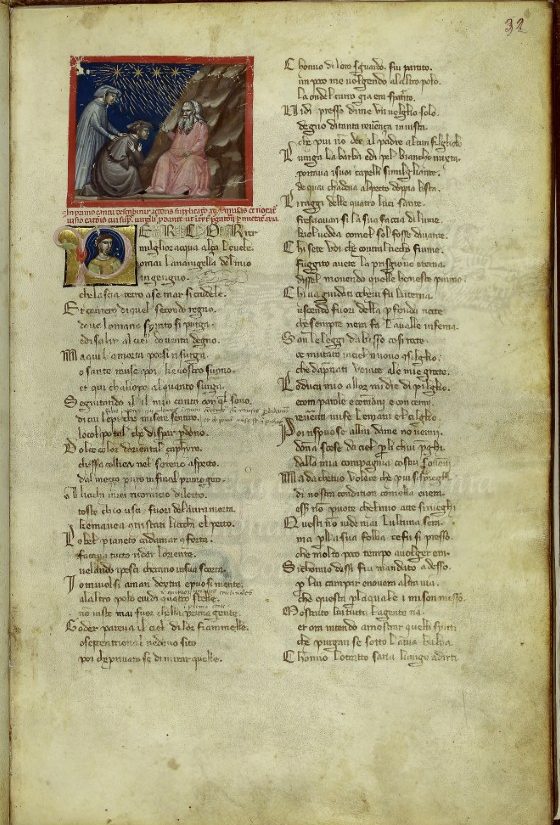
44 G 3 (Rossi 5) Miniature of the beginning of the Paradiso
This manuscript was probably produced in Bologna around the mid-14th century. From a graphic and codicological perspective, it belongs to the earliest phase of Comedy dissemination, including medium-to-large parchment codices written in a two-column chancery minuscule. Three miniatures at the beginning of each cantica and elaborately decorated initials indicate a luxury production, likely commissioned by a wealthy private patron, as is the case with many of the oldest Dante manuscripts known today.
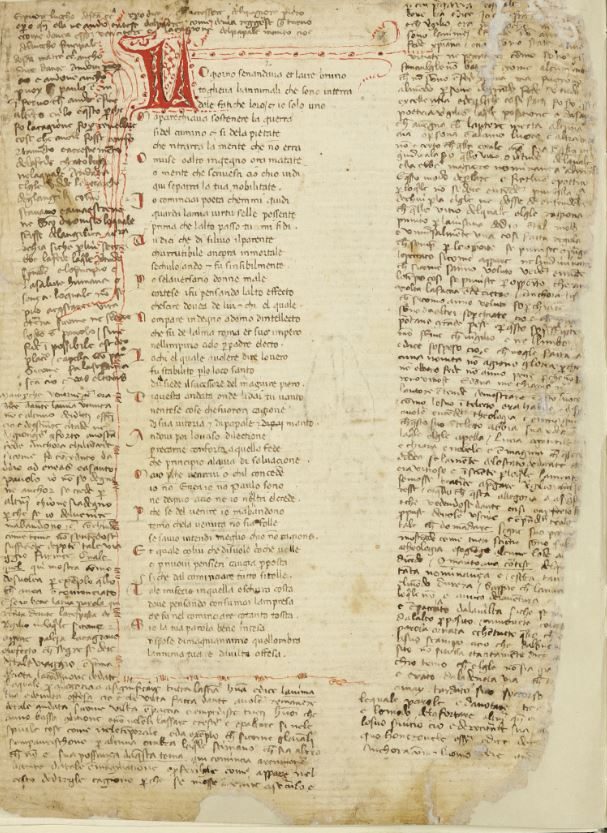
44 F 3 (Rossi 61)
Produced in Florence in the second half of the 14th century, this manuscript contains Jacopo della Lana’s commentary in the margins of the text of the Comedy. Composed inthe 1320s, this commentary aimed to make the poem accessible to a less learned audience (hence the choice of the vernacular). This manuscript circulated widely and was probably well read.Ownership notes include a Perugian notary, a 15th-century reader named Pietro Maestrini, and a certain Bastiano, who likely handled the manuscript in the early 16th century.
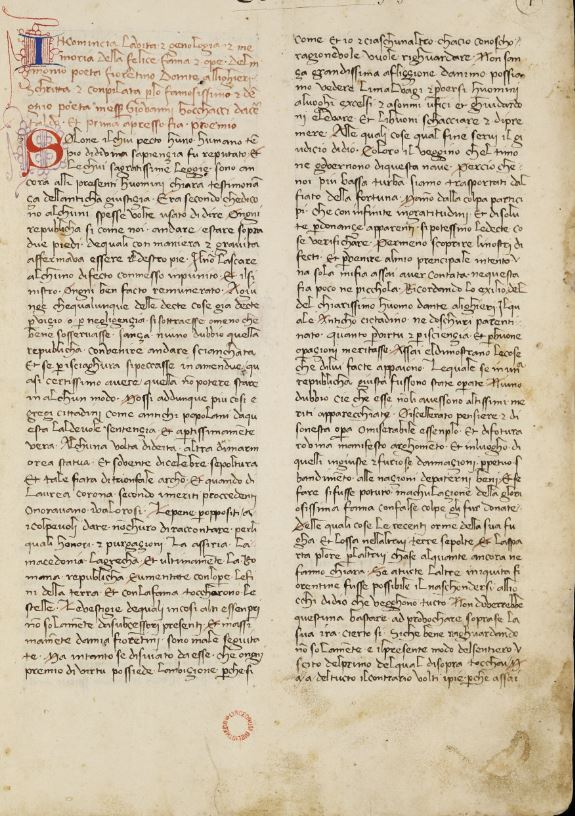
44 G 10 (Cors 1939)
In addition to the Comedy, this manuscript – produced in Tuscany at the end of the 15th century – contains Giovanni Boccaccio’s Trattatello in Laude di Dante, Jacopo Alighieri’s Divisione, and Il Credo di Dante by Antonio da Ferrara. In the 17th century, it belonged to Pierpaolo di Vincenzio Marzi de’ Medici, as recorded on folio 1r.
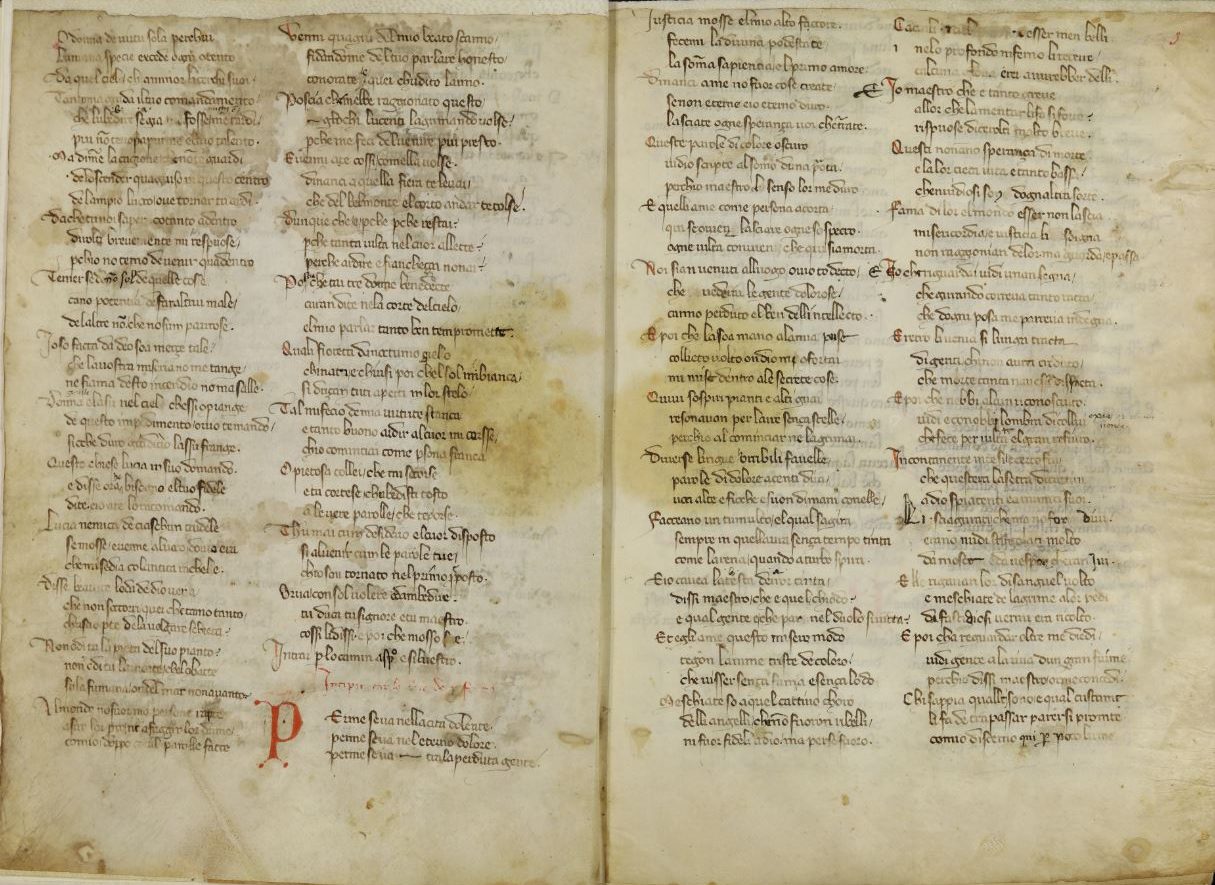
44 F 31 (Rossi 368)
This codex was produced in Lombardy in the last quarter of the 14th century by a scribe who signs as “Ianes de Parma gente lumbarda”, likely a Franciscan friar. A 15th- century owner of the manuscript, Frate Gabriele da San Giuliano, was also a member of the Franciscan order. The monastery of San Giuliano was founded in 1415 just outside the walls of L’Aquila. Another 16th-century owner remains anonymous, as the signature on folio 1r is illegible.
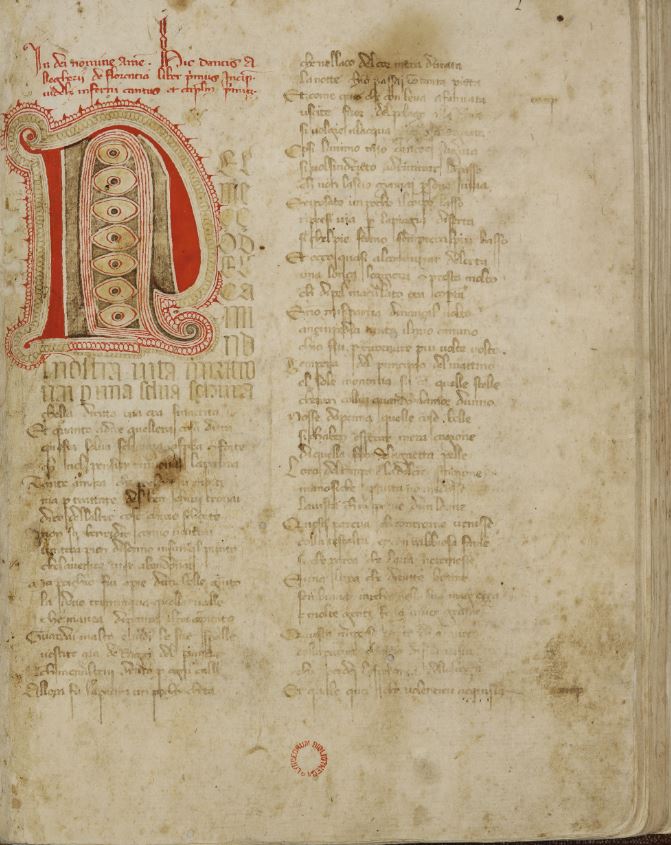
44 F 29 (Cors 1265)
Copied by Guido di Iacopo da Pratovecchio and dated 16 March 1379, this codex was produced in Romagna, at Susiniana (Val Senio). Guido di Iacopo da Pratovecchio wasa village notary, reader and transcriber of both classical and contemporary texts. In addition to 7 the Comedy, the codex includes Dante’s funeral epitaph, composed by Giovanni del Virgilio, a Bolognese rhetoric master and correspondent of the poet.
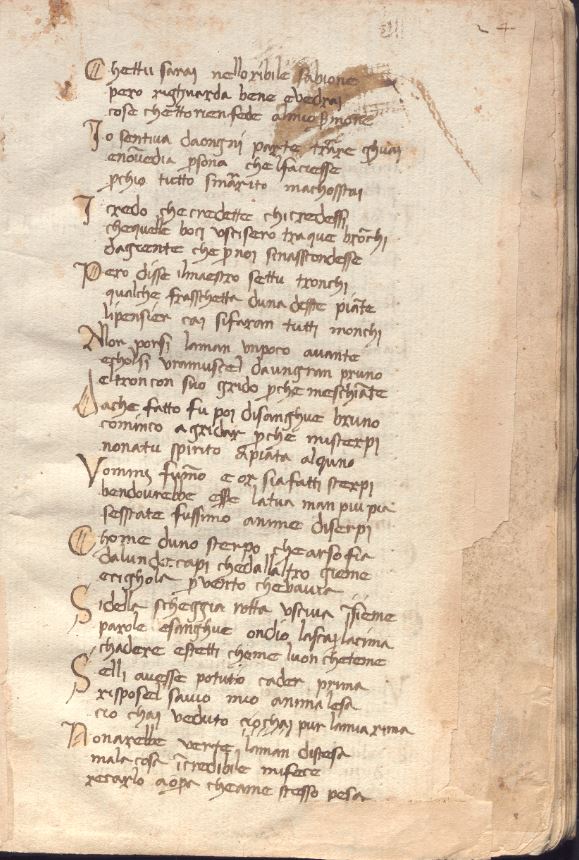
44 B 33 (Cors 610)
Produced in Florence in 1458 by Giovanni d’Angelo Buzzi, this manuscript remained for several decades within the family, as indicated by a note on a parchment leaf pasted on the front pastedown. It was subsequently inherited by Angelo and Domenico Buzzi, Giovanni’s sons. Later, in the 16th century, it belonged to Matteo di Angelo Mattei and then to his heir Benedetto, possibly his son. The manuscript features a parchment binding with wooden boards, datable to 1501.
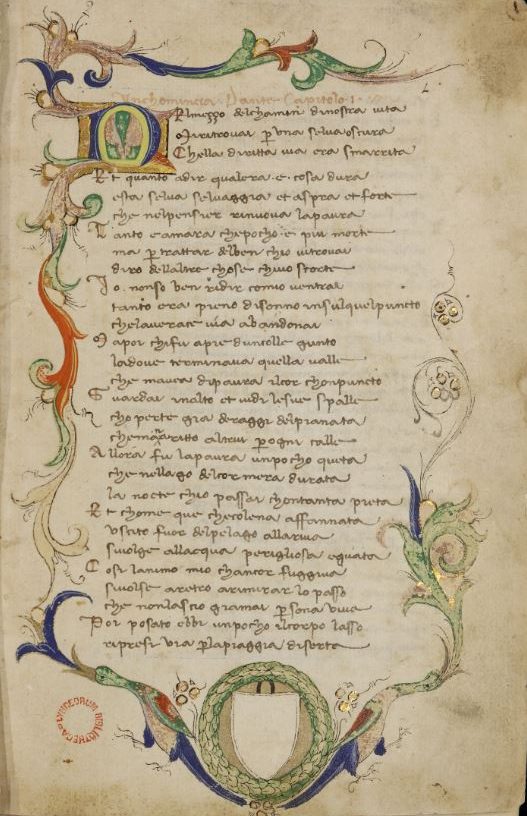
44 E 33 (Cors 609)
Created in Tuscany in the second quarter of the 15th century, this manuscript contains, in addition to the Commedia, other commentaries on Dante’s work, including La Divisione by his son Jacopo Alighieri.
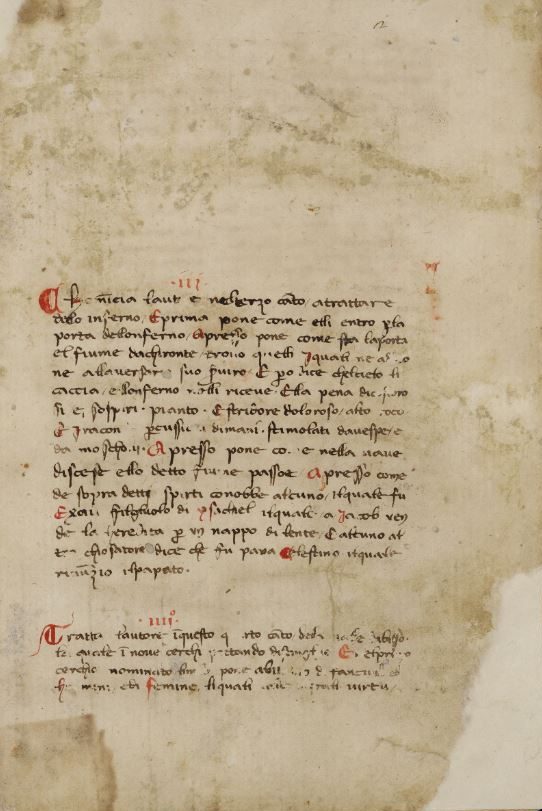
44 F 27 (Cors 607)
Also produced in Tuscany in the second quarter of the 15th century, this manuscript contains the Commedia along with additional commentaries, including Jacopo Alighieri’s Divisione.
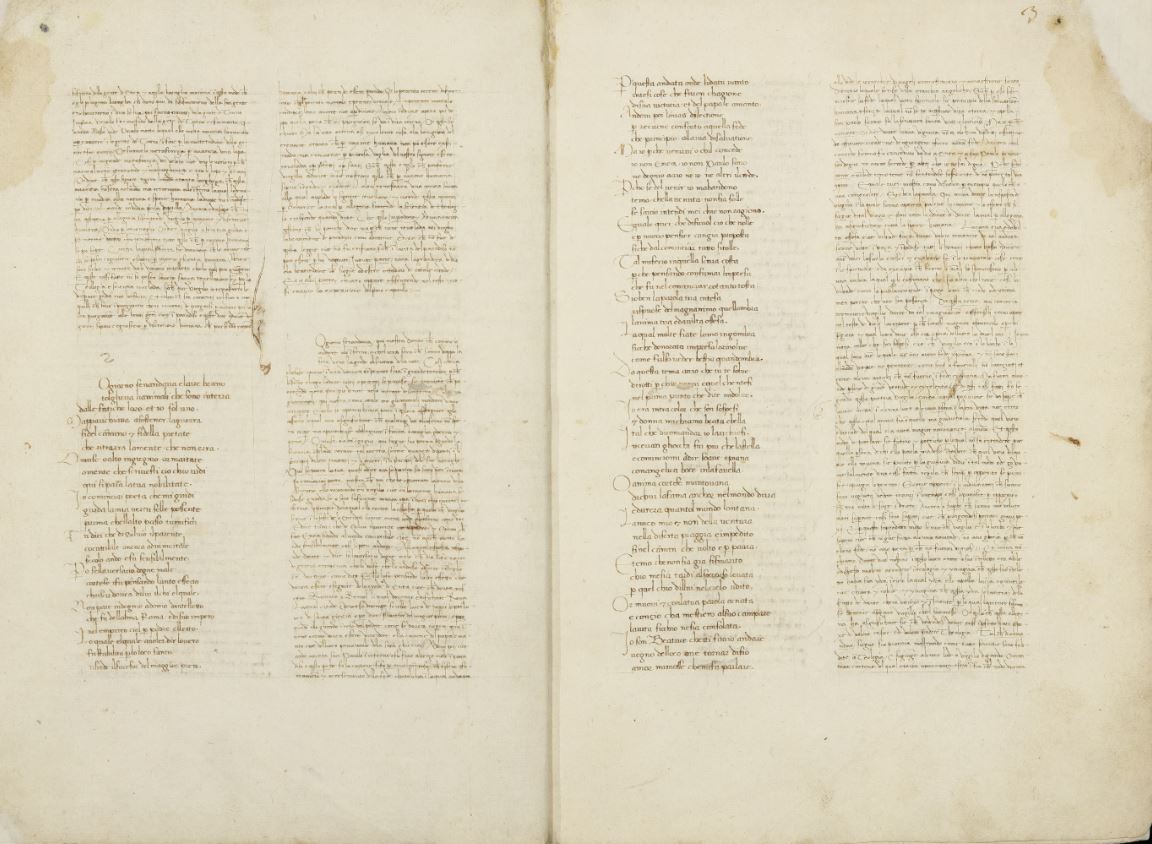
44 F 28 (Rossi 56)
This manuscript was produced in 1464, as indicated in the colophon on folio 73v, probably in northern Italy. The text of the Comedy ends at Canto XXXII of the Purgatorio, while Iacopo della Lana’s commentary is abridged. On folio 163 bisr, there is a list of works by Bartolomeo Fonzio, a Florentine intellectual and writer active between the 15th and early 16th centuries, together with the associated prices.